
Studio Crawl: GDP
Copyright © GDP, 2024
Hidden in Jackson Square, there’s an agency you could easily walk past without noticing. An agency that keeps things quiet on the outside but does work that echoes far beyond its walls.
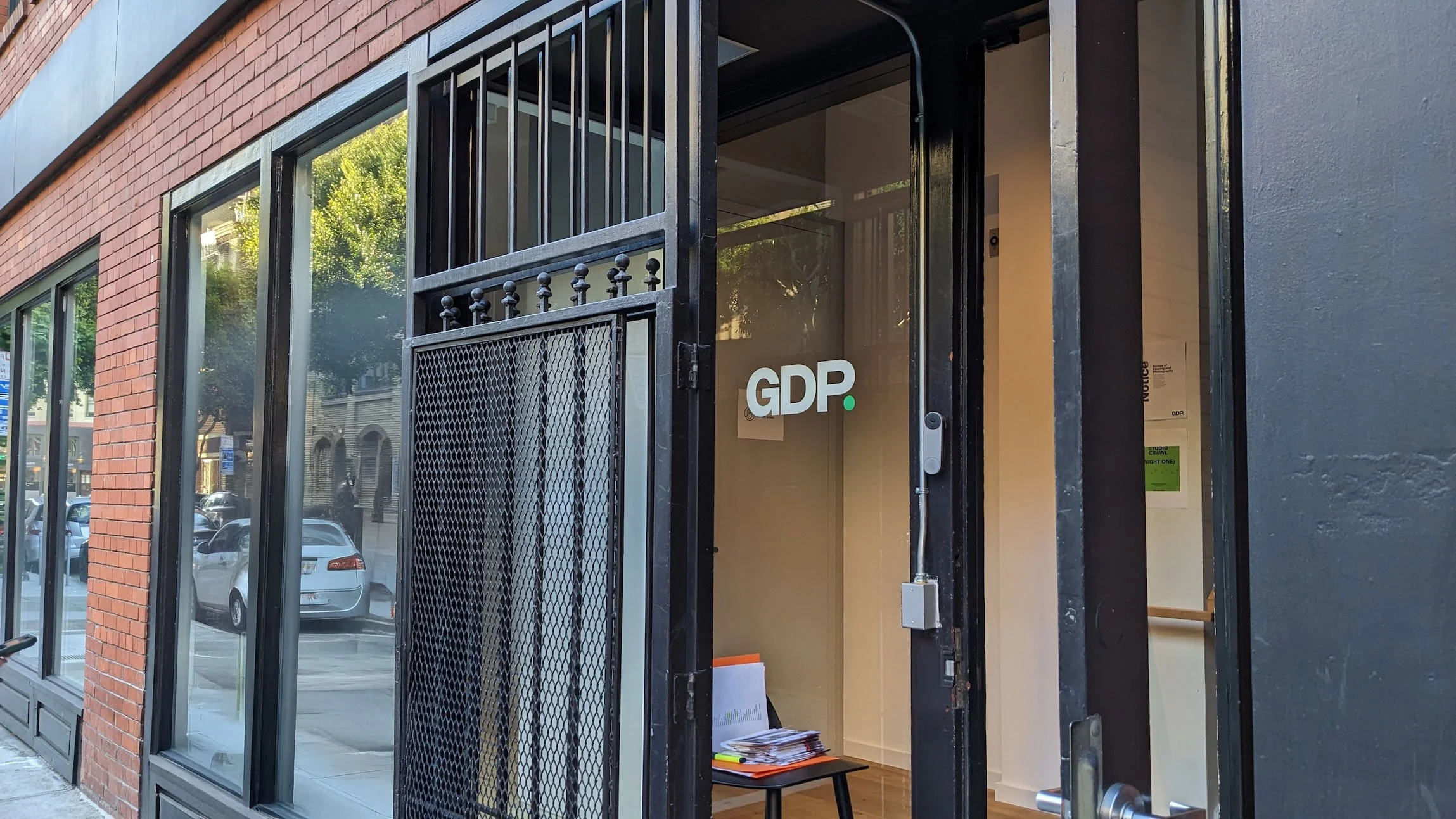
Entrance to the GDP studio in Jackson Square during San Francisco Design Week’s Studio Crawl.
That agency is Godfrey Dadich Partners—better known as GDP—a team that blends strategy, design, product, and journalism to build story-driven brands. One of their best-known projects is the work they did for National Geographic, where they reimagined the iconic publication.

GDP partnered with type designer Tal Leming of Type Supply, who refined the logotype to feel bolder while still preserving its classic roots. (Top: Before, Bottom: After)
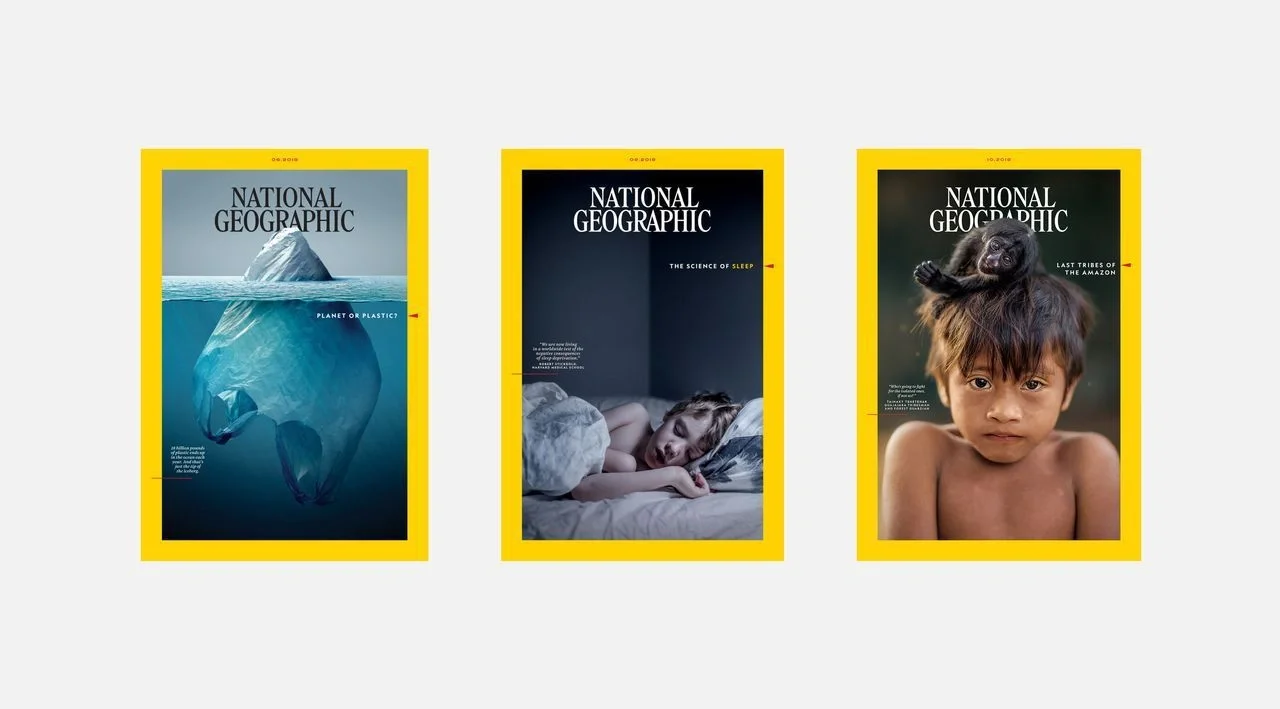
The updated logo draws from the magazine’s long typographic legacy, but streamlines the forms so the mark supports the photography rather than competing with it.
During San Francisco Design Week, I had the chance to step inside GDP as part of the annual Studio Crawl, where studios open up their doors to give visitors a look at their spaces, their teams, and their work.
As I walked in, I as greeted by two posters from their work on Abstract: The Art of Design. It’s a show I’ve been a big fan of, where artists and designers break down their process. Some of my favorite episodes are the ones that feature Christoph Niemann and Paula Scher from season one, along with the Jonathan Hoefler episode from season two.
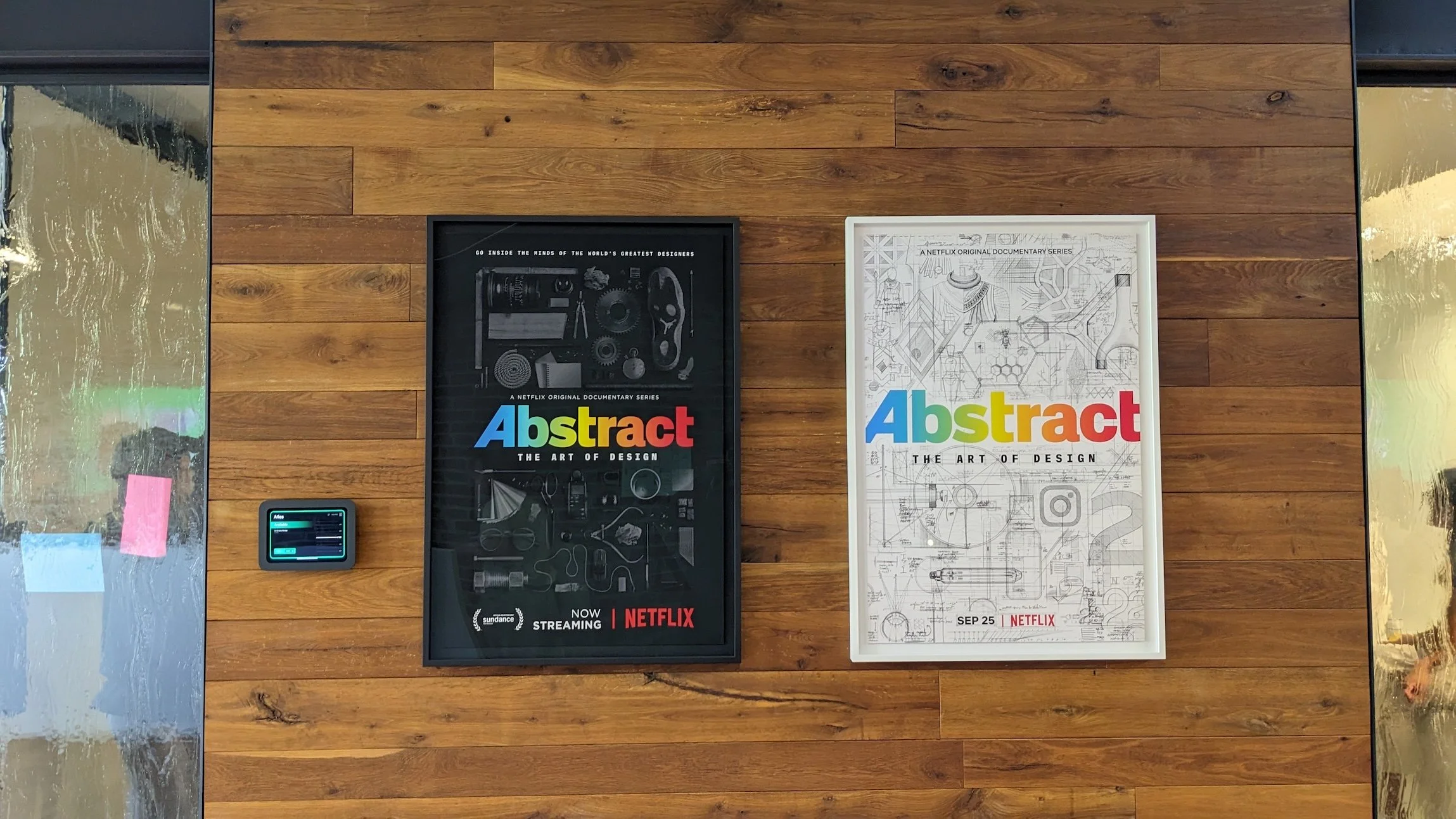
Inside the GDP studio, with posters from Abstract: The Art of Design displayed along a wood-paneled wall.
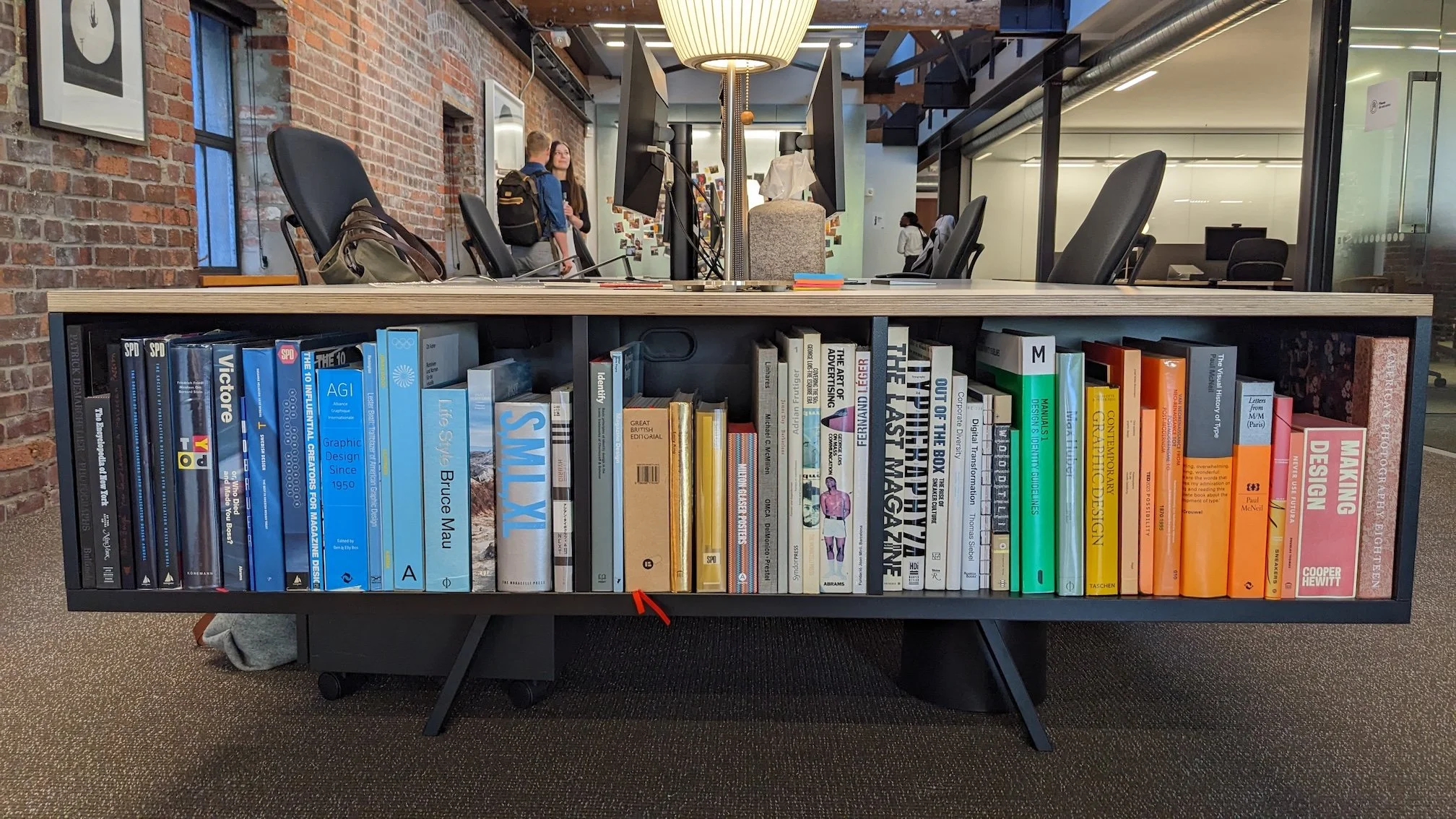
As I walked further in, I came across a beautifully color-coded bookshelf with design books, monographs, and reference titles. A few favorites I noticed were Michael Bierut’s How To, Alan Fletcher’s Picturing and Poeting, Chermayeff & Geismar’s Identify, Louise Fili’s Elegantissima, and Josef Müller-Brockmann’s monograph by Kerry William Purcell.
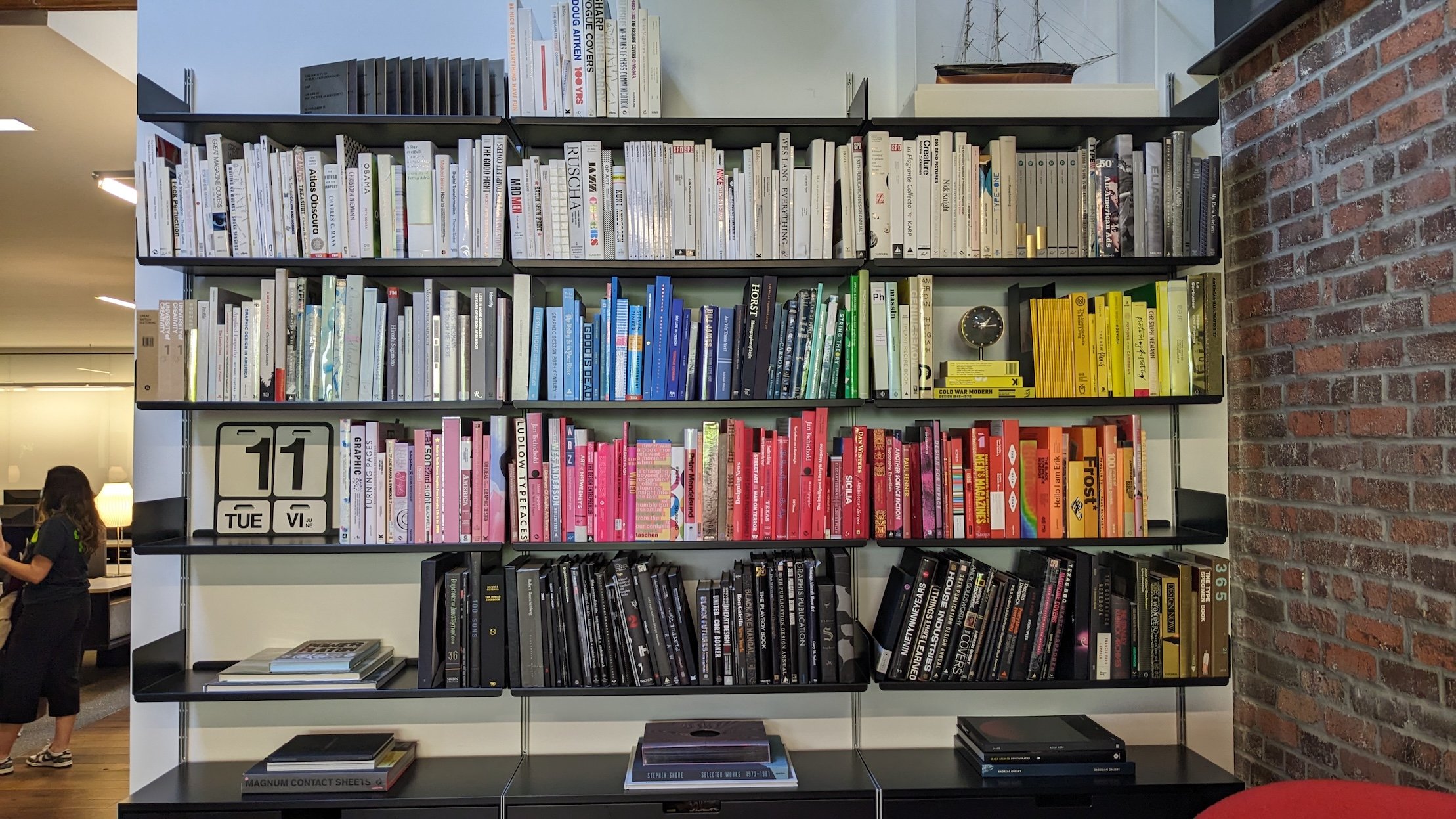
A color-coded bookshelf inside the GDP studio, filled with design books and creative references.
I then came across a big wall that GDP uses to display their work at a glance. The work pictured here is from the brand guidelines they developed for Sustainably Yours, a pet-care brand. Note the beautifully designed 'SY' monogram.
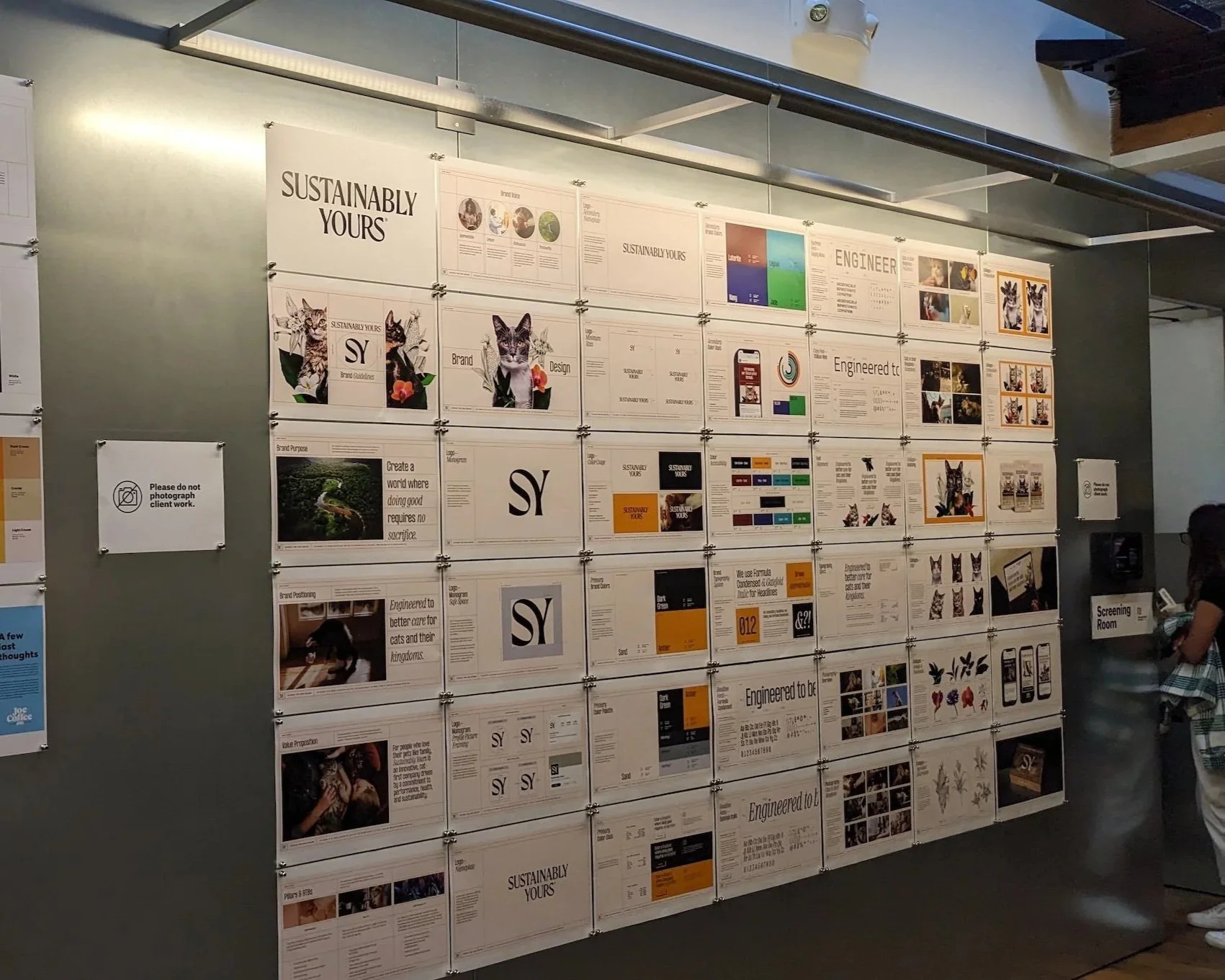
A wall inside the GDP studio displaying brand guidelines and design explorations for Sustainably Yours.

Sustainably Yours monogram
Beyond the display wall is GDP’s open-concept workspace, with long shared desks, rows of monitors, and a large portrait of Obama on a brick wall. Here I’m pictured with one of GDP’s writers.
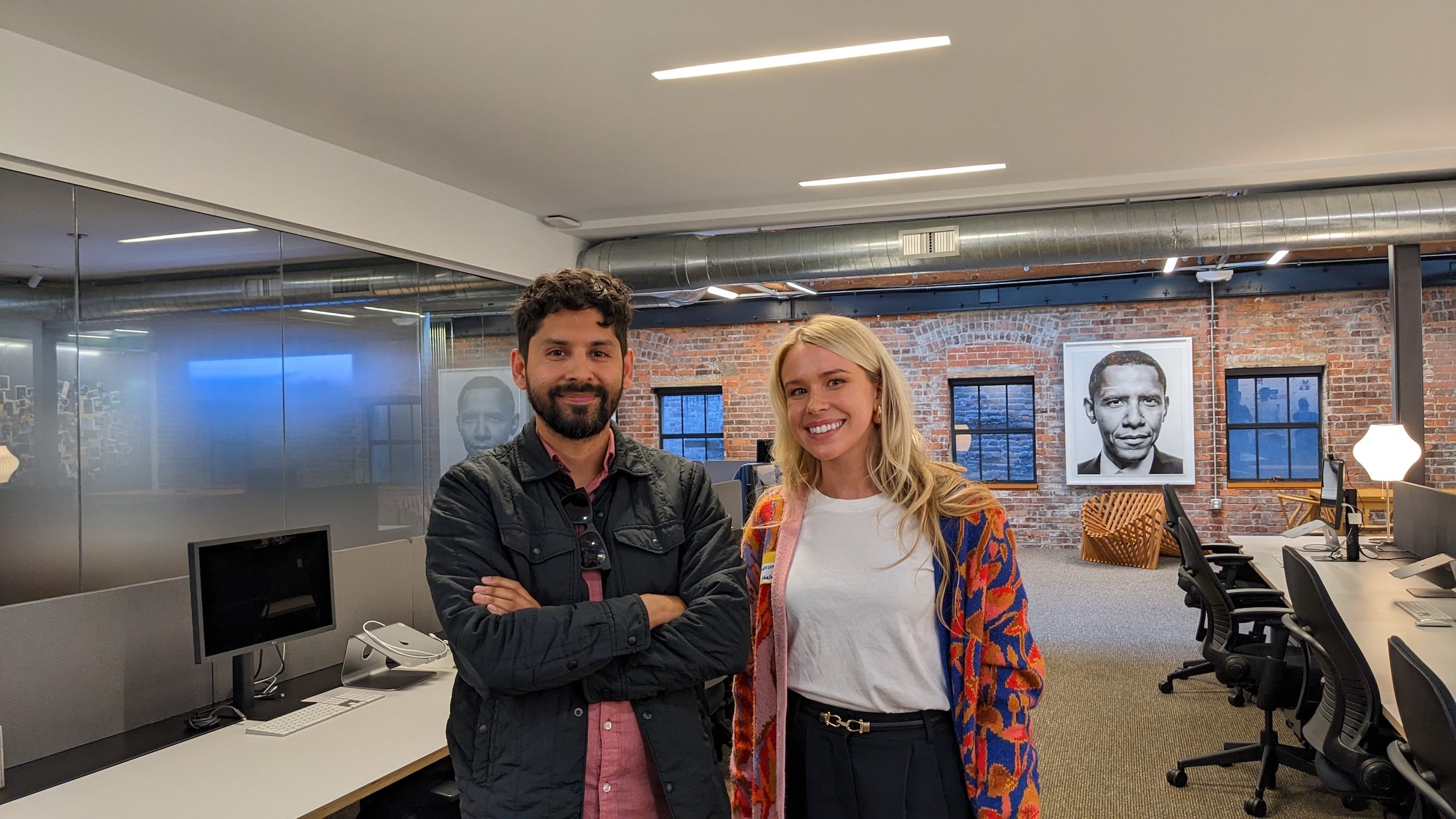
With one of GDP’s talented writers and a large portrait of a well-known public figure in the background.
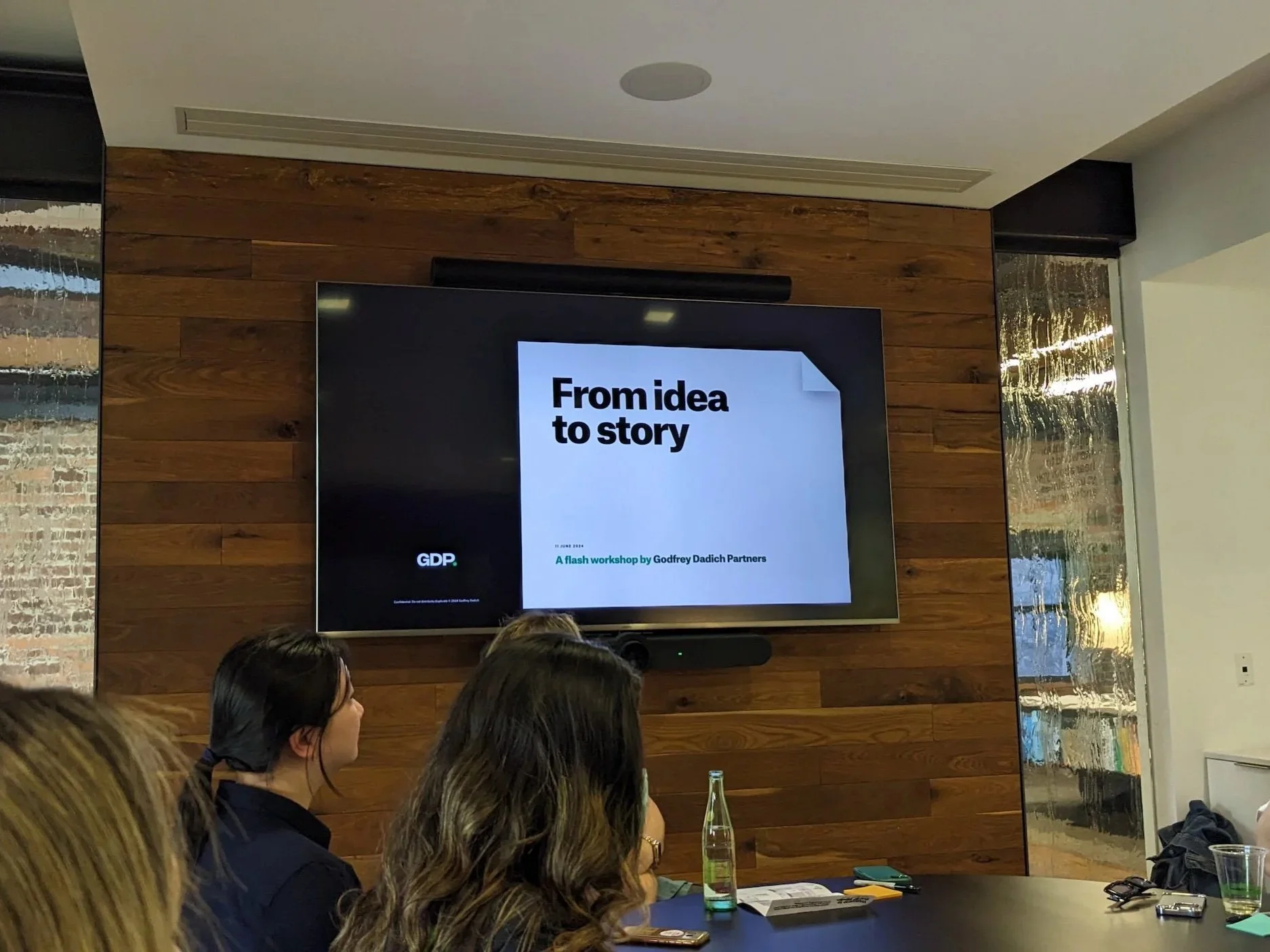
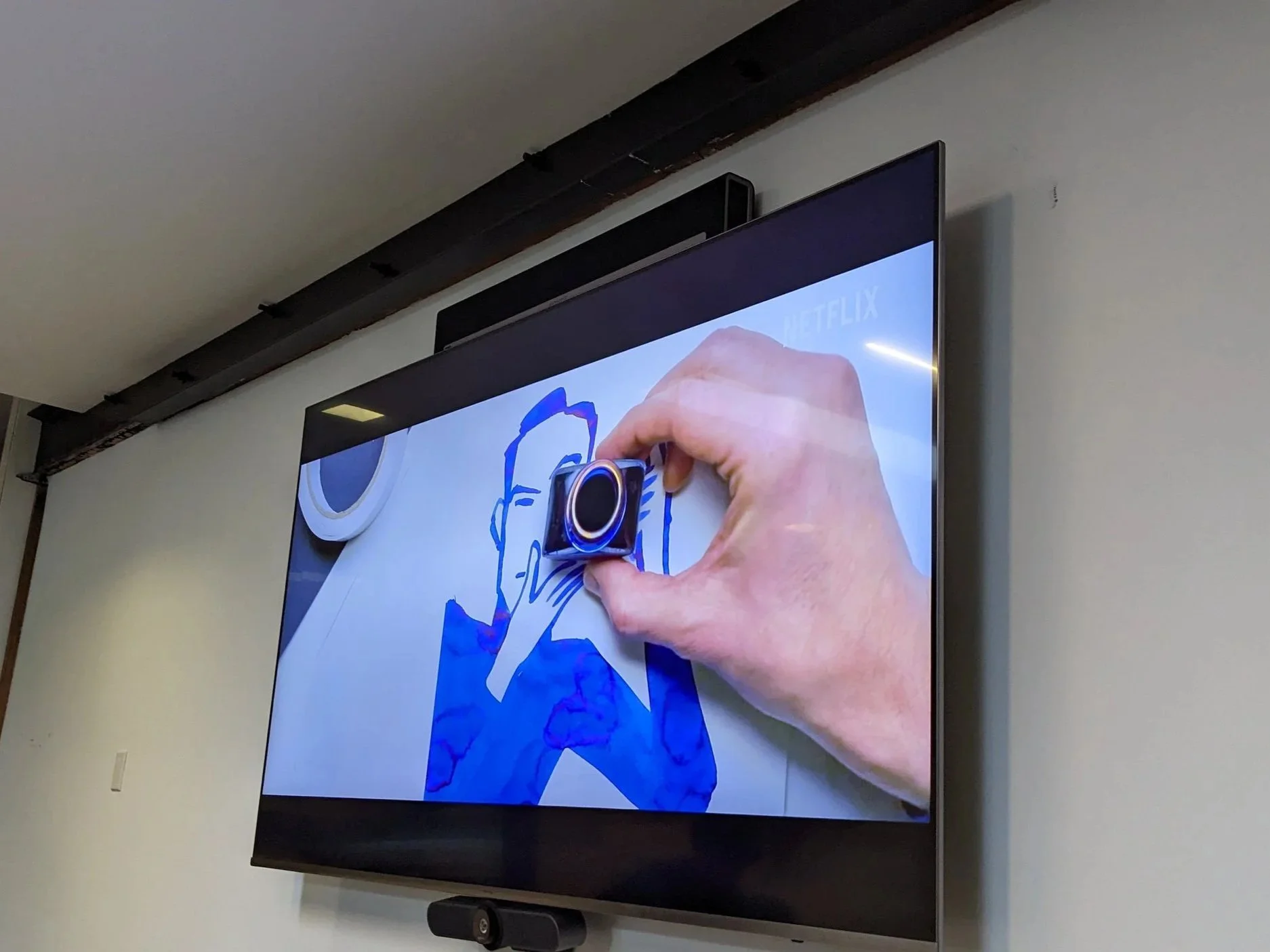
The tour included flash workshops where the GDP team showed how they shape early ideas into stories, along with screenings of videos they’ve produced.
I love how there are bookshelves all over the studio—under desks, in corners, even built into tables—stuffed with classic design books.
More books!
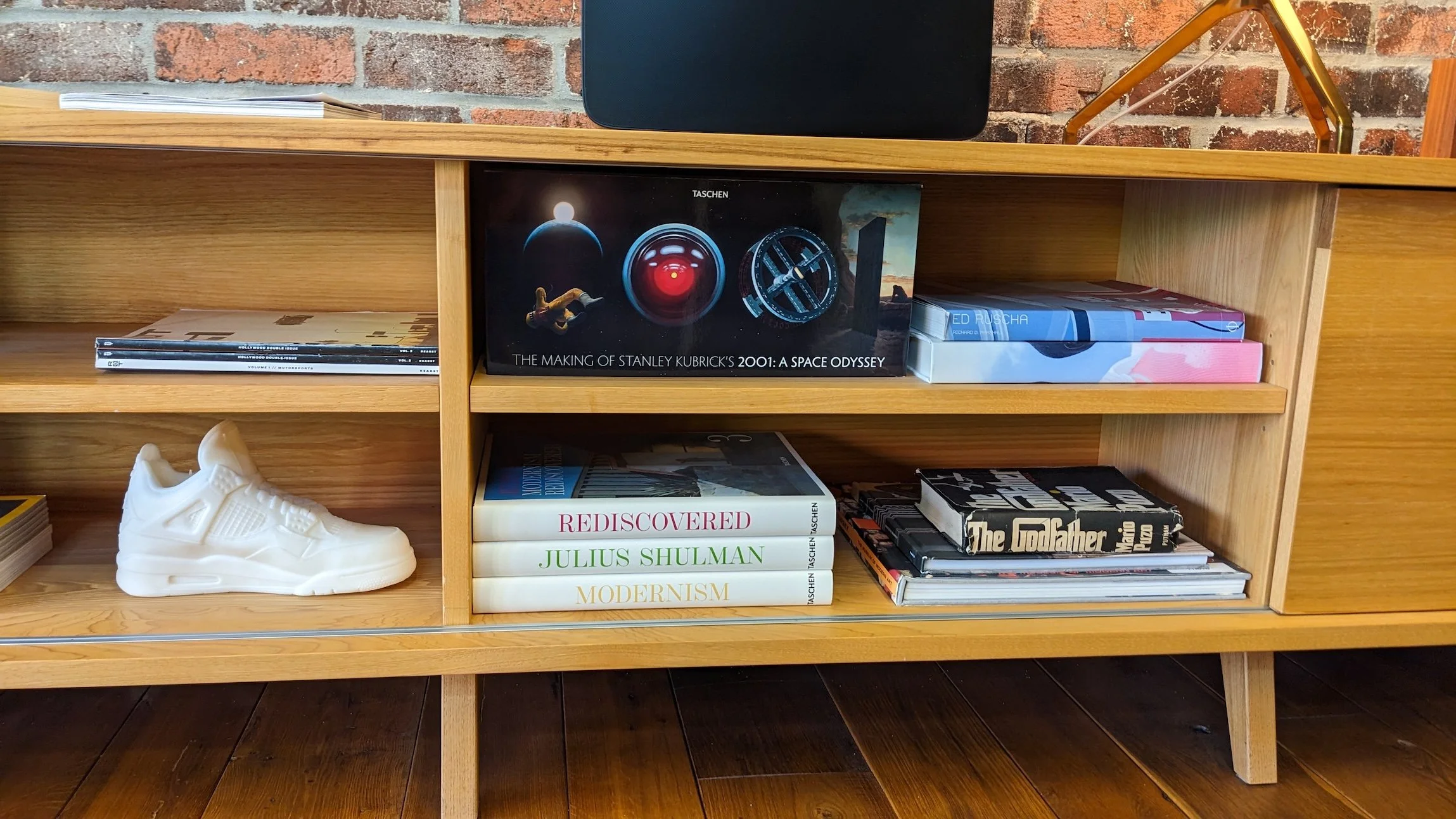
2001: A Space Odyssey and The Godfather—two of the greatest films of all time.
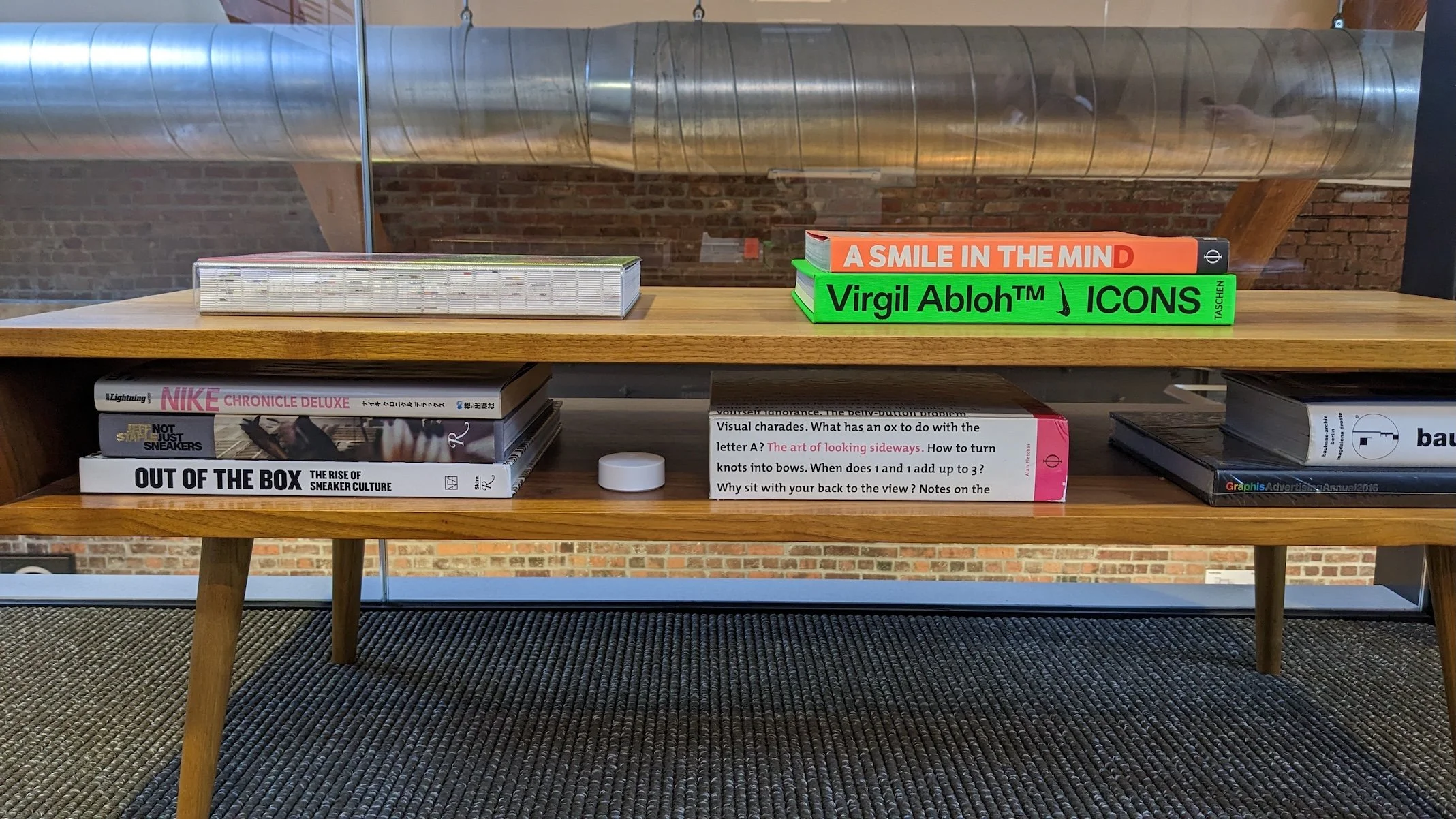
Two of my all-time favorite design books: The Art of Looking Sideways by Alan Fletcher and A Smile in the Mind by Beryl McAlhone and David Stuart.
This has been one of, if not the nicest, creative spaces I’ve ever been in. From the colorful bookshelves to the exposed brick walls, it must be so cool and inspiring to come in and work here. It’s no wonder GDP produces such strong work.